“high quality raw beans” search results (3000)
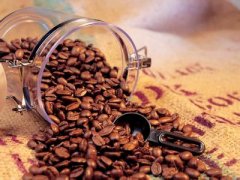
Manual inspection of defective beans for hand selection of high-quality coffee beans
With reference to the origin and grading, grab the raw beans with your hands and check their appearance. The feeling of the hand is very important. Judging from the appearance of raw beans, their quality must have some experience, at the same time, it is difficult to set standards. The color has no difference in uniform light green, with luster. Also take into account the changes in color after harvest. The shape requires uniform and neat particles, and there should be no deformed beans.
2014-12-29 Boutique coffee beans hand selection defects handicraft inspection reference origin grade division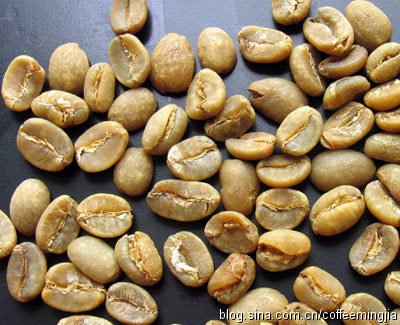
Introduction to the main points of the knowledge of raw coffee beans: a detailed explanation of the classification of raw coffee beans
The last step in the processing of raw coffee beans is grading, so what are the grading methods of raw coffee beans? Do different countries adopt the same approach? At present, there are three main rating criteria for raw coffee beans, and different countries adopt different rating methods according to their own production conditions and national conditions (not all coffee producing countries adopt the same method).
2015-12-18 Coffee raw beans knowledge main points introduction grading detail explanation coffee
Understand the standards of quality coffee
1. High-quality raw beans with flawless beans (raw beans with few defective beans such as fermented beans and moldy beans, but not high-priced beans) 2. Freshly roasted coffee (coffee is best served within two weeks after roasting, preserved as beans and ground before brewing) 3. Freshly ground coffee 4. The freshly brewed coffee is summarized as follows: the so-called good coffee quality coffee can be defined as excellent.
2014-08-07 Understand quality coffee standard flawless high quality raw beans rare fermented moldy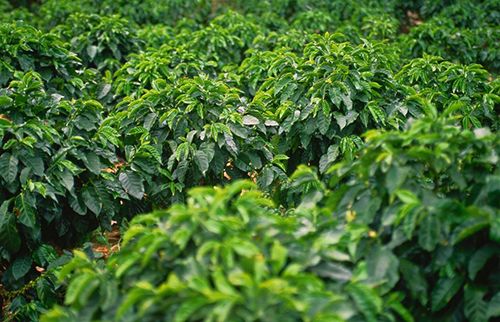
Fine coffee, high quality washed raw beans, El Salvador Ataisi Manor Pacamara.
Coffee in El Salvador is grown mostly by small farmers, who grow it in the traditional way: almost 100% shade. The coffee harvest lasts from November to March. The fresh fruit of coffee is picked by hand. On the whole, Salvadoran coffee inherits the mild quality of Sino-American coffee, which is soft, slightly sour and beautiful.
2016-07-27 Boutique coffee quality washing raw beans El Salvador Ataisi manor
The first step towards quality coffee roasting
In a short period of ten years, the import of raw coffee beans has tripled from 5, 000 metric tons per year to 15000 metric tons. This means that Taiwanese consumers have tripled their coffee consumption, thanks to the popularity of Starbucks, 85C and supermarket coffee, which has gradually become part of Taiwan's eating habits.
2014-06-19 Coffee knowledge coffee roasting coffee technology
Introduction of honey treatment method for raw bean of high-quality coffee
The so-called honey treatment (Miel Process in Spanish) is said to refer to the process of making raw beans by sun-drying with mucous membranes. After the outer pulp of the coffee bean is removed, there will be a layer of sticky jelly. The traditional method of washing is to wash it off with clean water, but because of the limitation of water resources in some high-altitude areas, there is this way of direct drying. Honey treatment process
2015-04-17 Boutique coffee raw beans treatment method introduction so-called Spanish M
Introduction to the treatment of high-quality coffee and raw beans-tanning method
Sun treatment will first identify sunken beans in the sink, that is, ripe or half-ripe beans are spread in the drying farm for natural drying. The specific time depends on the local climatic conditions, which usually takes two to four weeks. When the moisture of the coffee bean is reduced to 12%, then use a sheller to grind off the hard pulp and silver skin. The requirement of the sun treatment on the climate is very high.
2015-04-17 Boutique coffee raw beans treatment method introduction sun exposure
Fine coffee Panamanian coffee raw bean rules Panamanian coffee producing areas
The coffee grown in the highland is absolutely high quality, but the plantation coffee is not yet on the market. Panamanian coffee beans drying Panamanian coffee beans Panama coffee (Panama) coffee is smooth, light and sour, its high-quality coffee beans flavor is pure, very distinctive. The first batch of coffee exported each year is shipped in November, and almost all high-quality coffee beans are shipped to France and Finland.
2016-05-10 Boutique coffee Panama raw beans rules producing areas highlands cultivation absolutely
Grading standard of raw coffee beans
There are two ways to classify brown raw beans, one is to filter the number, and the other is to divide it by elevation. It is divided by the number of the filter screen, and the size is in the unit of the screen (size). Round beans are generally smaller than flat beans, between 8-13 and 12-29. 8, 9, 10. 12, 13. 18. 29 = small, medium, ordinary. Quasi-big. Big, extra large. The bigger the size, the bigger the beans. Like SC-1.
2014-08-20 Coffee knowledge grading standards coffee raw beans
The processing method of High-quality Coffee and Coffee
Raw beans generally use washing and drying methods, both of which can produce high quality raw beans. First, washing method: generally speaking, there will be more distinct acidity and more consistent flavor. In the process of washing, the pulp is immediately separated from the raw bean, rather than drying it. The steps are as follows: 1. Selection: put the fruit in the sink and let stand for about 24 hours. Mature and immature due to
2014-11-04 Coffee knowledge boutique coffee science coffee raw beans coffee bean processing
High-quality coffee beans know coffee raw beans: elephant beans
All kinds of coffee beans have different tastes, but they are almost the same size, but the elephant bean is different, it is three times or more than other coffee beans. The taxonomic name of elephant bean is Maragogipe, which comes from Malagogippe County, Bahia State, Brazil. The taxonomic status of elephant beans was first established in the county in 1870. A hybrid variety of Arabica coffee.
2014-10-09 Coffee knowledge boutique coffee beans coffee raw beans elephant beans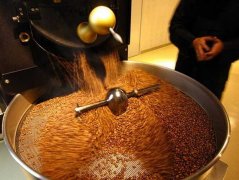
Baking and mixing of high-quality coffee beans
When there are good coffee beans, the most important step to make them high-quality coffee is roasting and mixing. In general, raw beans have a pungent earthy smell, and after the correct baking, it will give off a strong aroma. In fact, raw beans contain 700 to 800 aromatic ingredients, which must be awakened by baking. First of all, the raw beans are roasted for more than 200 ℃ and the moisture begins to steam.
2015-01-23 Boutique coffee beans common sense roasting mixing quality good coffee raw beans
Classification standard of coffee raw beans for fine coffee
There are two ways to classify raw coffee beans, one is the filter number, and the other is the elevation. It is divided by the number of the filter screen, and the size is in the unit of the screen (size). Round beans are generally smaller than flat beans, between 8-13 and 12-29. 8, 9, 10. 12, 13. 18. 29 = small, medium, ordinary. Quasi-big. Big, extra large. The bigger the size, the bigger the beans. Like SC.
2014-09-03 Coffee knowledge boutique coffee beans coffee raw beans coffee bean grading
High-quality coffee like beans in raw beans of coffee
All kinds of coffee beans have different tastes, but they are almost the same size, but the elephant bean is different, it is three times or more than other coffee beans. The taxonomic name of elephant bean is Maragogipe, which comes from Malagogippe County, Bahia State, Brazil. The taxonomic status of elephant beans was first established in the county in 1870. A hybrid variety of Arabica coffee.
2014-11-22 Coffee knowledge boutique coffee science coffee raw beans elephant beans
Frequently Asked Questions about espresso coffee
A. The choice of raw beans TX know something about coffee, the current common coffee beans can be simply divided into three categories: Robusta, commercial Arabica, boutique coffee. The choice of espresso beans, according to the quality of the producer's grasp, will also face the choice of these three types of coffee beans. From a cost point of view, the price from high to low naturally is fine coffee, commercial Arabica
2016-09-02 About Italian Espresso Coffee FAQ Interpretations Green Beans Choices Yes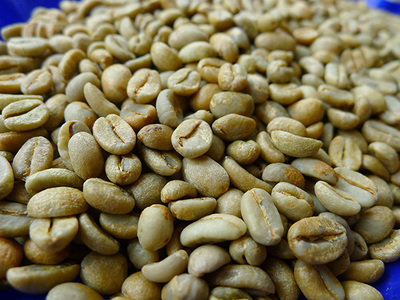
Vivette Nan fruit imported raw beans Guatemala Central American SHB very hard beans single coffee raw bean price
Guatemala, which is famous for its highland topography, has a unique flavor of high-altitude hard beans that perform well in all-inclusive coffee producing areas and produce high-quality coffee with eye-catching performance. Guatemalan coffee has rich flavor changes and strong acidity, and sometimes can feel some changes in spices, from medium to full consistency, high complexity, is the best representative of complex style.
2016-04-13 Viv Tenan Import Raw Bean Guatemala Central America SHB extremely hard Bean sheet
Knowledge of high-quality coffee beans detailed analysis of the components of coffee beans
★ moisture: the water content of coffee beans varies greatly with different processing stages and products. The moisture content of wet coffee beans with film is about 50%, while that of dried raw coffee beans is about 10%-13%, and that of roasted coffee beans is only less than 5%. The existence of water in coffee beans is the same as other kinds of food and beverages, because it contains a considerable amount of hydration colloid macromolecules.
2014-09-27 Coffee knowledge coffee bean ingredients boutique coffee beans
How to make coffee beans taste more fragrant, the key is to have high-quality raw materials.
Petty-bourgeois women who know how to enjoy seldom favor instant coffee and prefer to spend more time and patience cooking it themselves. The key to a good cup of coffee is to have high-quality raw materials. So, for the crucial coffee beans, how to choose? Here, we focus on the varieties of coffee beans with full and symmetrical particles and mellow taste, such as East Timor Arabica beans and Ethiopia.
2015-09-17 How coffee beans taste more fragrant key to have boutique extreme raw materials
Boutique coffee learns how to distinguish between new beans and old beans
The main components of raw beans are: carbohydrates, about 49%; moisture, about 12%; protein. About 11%; chlorogenic acid, about 7.6% alkaloids and trace elements, about 0.4%. According to the length of time, raw beans can be specifically divided into: seasonal beans (Current Crop), that is, fresh beans; new beans (New Crop), that is, raw beans of the first year; and old beans (Past Crop), that is,
2014-11-22 Coffee knowledge boutique coffee science new coffee beans old coffee beans
High-quality coffee beans common sense Tanzania PB coffee raw beans
Most of the Tanzanian beans are grown in Mr. Kilimanjaro and Mt, near the northern Kenyan border. The Meru area, often called "Clemangaro", is occasionally named after the distribution center Moshi or Arusha. In addition, on the south side of the border, a little washed Arabica beans are produced to the nearby big city of Baya (
2015-05-29 Boutique coffee beans common sense Tanzania coffee raw beans